
In a striking example of businessman Timothy Barton has been subjected to severe punitive measures without due process. This website aims to shed light on the individuals orchestrating these actions and the broader implications of such legal maneuvers.

Explore the people involved in this malicious prosecution against a successful businessman deprived of his assets, due process and constitutional rights



The aggressive actions against Timothy Barton, including the abrupt seizure and undervalued sale of his assets, have raised serious questions about the lawfare and political witch hunt of the legal process.


Peoples



Historic Timeline
MAR
Meeting Steve Wall
Barton met Steve Wall in June 2017 who was impressed with Barton's successful track record and respect.
JUN
Meeting Michael Fu
Barton was introduced to Steve Wall partner and friend Michael Fu. Presented as the Top Seller for Lennar Homes and had been doing business with Steve Wall for over a year. Contrary to the depositions and testimony of Fu. Barton does not solicit FU working. The problems and challenges related to Fu were not disclosed to Barton at the time of engagement. In June 2017, he provided assistance to Michael Fu with fee disputes related to several real estate projects.
SEP
Joined as Fee Developer
Barton became the Fee Developer for first project Seagoville in September 2017. Barton became fee developer for the Steve Wall's Wall00 and Wall009 and all the Wall projects. All land acquisitions were made by Steve Wall and under his arrangement funds brought-in by Fu
FEB
Carnegie Development
Barton became the custodian for Carnegie Development LLC and it was agreed that the custody will be returned to Steve Wall when he is out of the Law suits.
APR
Wall011 & Wall012
Wall011 and Wall012 were launched in April 2018 but they were considered bad deals due to lack of funds with Steve Wall Unsecured Co-lender agreements funds were brought in for supporting the Wall entities projects
SEP
Lack of Funds & Bad Deals
There had been a consistent lack in funds for each project and the deals done by Steve Wall for various properties, so they pursued the Co-lenders funds more rigorously.
APR
Loans Began to be Repaid
Many repayments of loans were done as scheduled. However, the pattern of funding with regards to non-matching of names on agreements and funding people was identified and found alarming. Problems from Fu Started
JUL
Wall020
This entity was formed by Steve Wall and Michael Fu, clearly showing their intentions of continuous money laundering.
SEP
Term Sheet for repayment
As a result of the mediation process and Fu agreed and signed the term sheet that the funds will be transferred to the accounts from where they are originated.
NOV
Fu Filed Chapter 7
Fu along with his few co-lenders filed Chapter 7 BK against all wall entities. Which was later dismissed for no proof of claims. Entities were under funding and no interests were due for Wall010 till Wall 018.
Guidepost
Barton hired them to investigate the original lenders for Wall entities. They tried and brought forward their report that those people were not real. A past FBI Agent as its owner
FEB
COVID Crisis & 2999 TC
Barton discussed with Madison Capital the delay in making tax payments, and Madison agreed there was no need to make the tax payment as Barton had an escrow of $1.5 million with Madison. This same was used by Vipin Nambiar with Madison Capital to aggressively pursue foreclosure and tool to take over.
MAY
Chapter 11
Due to continuous attacks by Fu, COVID crisis and fundamental errors in the business between Steve Wall and Fu, all entities were filed for Chapter 11. (verify)
AUG
Erin Nealy Cox
Joined the HNGH and organized an investigation against Barton. Later within the next few months of her vicious attacks, Barton was jailed and all other litigations opened against him.
APR
A continuous Legal Battle
Erin Neely Cox began subpoenaing Madison Capital for records on the loan associated with 2999 turtle Creek to put pressure on Madison Capital and force the sale of the full loan to the Hunt family, who held a minority position on the Loan. Erin Neely Cox retired from the prosecutor's office and joined Kirkland and Ellis, with her first client being “Vipin Nambiar” and the Hunts in the 2999 Turtle Creek bankruptcy case, despite having no prior bankruptcy experience.
JAN
Continued Investigation
SEC Continued its investigation which it started from 2020. However, had not been able to find any evidence against Mr. Barton because his financial records were spotless.
APR
Michael Fu
Now Michael Fu went reckless on Barton. Started putting in his money against suing and maliciously destroying Barton estate. Committed himself to use all means against Barton.
SEP
SEC Complaint & DOJ
SEC Filed complaint against Barton for allegations on Securities violation. DOJ issued Indictment against Barton for the same.
Barton was Jailed
Jailed for 5 days on a Friday at 5am without being told any charges against him. The FBI appeared at his house with full SWAT teams and with aggression not typical for a businessman or a white collar crime.
OCT
First Receiver Employed
SEC suggested David Wallace, but Distt Judge Brantley Starr employed his ex-University Fellow Law Firm Brown Fox PLLC Cort Thomas
All properties and docs and office sealed and taken over by receiver.
JAN
Continued Investigation
The receiver went all out for the fire sale of following:
1. Frisco Property
2. SF Rock Creek
3. DLP Settlement
4. Lumar Land & Cattle Settlement
First Appeal
Oral arguments were heard on date, after finding them very favorable for defendant, the receiver went off to fire sale everything. Auctioning of building properties on date
MAR
Amerigold
Fore sale pursuit of selling Amerigold Suites
MAY
HNGH Settlement
Order granted for settlement with HNGH for mere $2.5 MM against a property worth of $72 MM with a total loan of $45 MM.
SEP
Receiver Vacated
The first receiver was vacated by Fifth Circuit, District court remanded for taking no less drastic actions and not complying to Netsphere.
Declarations of Cort Thomas & Carol Hahn
All barriers crossed. The Judge ordered for bringing evidence by the receiver and Distt Court employee non accountant Carol Hahn to support receiver’s employment
NOV
2nd Receiver Employed
The same receiver re-employed. 54 entities put under receiver. 119 entities in Preliminary Injunction. Blessing all previous orders ratifying sales.
JAN
Continued Fire Sale
The receiver re-employed his forces for fire sales pursuit:
1. Frisco Property
2. SF Rock Creek
3. TC Hall
4. Amerigold Suites
APR
Auction of Art Pieces
After auctioning the office items of 2999TC office, receiver went on to auction all art pieces.
MAY
Lost Creek Property
Settlement with Somerset Lost Creek and Beryl Artz Bypass Trust
JUN
Illinois Property
Settlement with Tamamoi LLC processed for ratification.
SEP
Agreed on Sanctions
Defendant and receiver agreed on limited sanctions of communication and interference.
NOV
2nd Receiver Employed
The same receiver re-employed. 54 entities put under receiver. 119 entities in Preliminary Injunction. Blessing all previous orders ratifying sales.
DEC
Assumed Second Appeal Hearing
The reply brief against SEC was filed in Oct. Assumed hearing followed by second receivership vacating orders presumed .
APRIL
Fifth Circuit Opinion
On April 17, 2025, the Fifth Circuit affirmed the receivership’s imposition and scope and also affirmed the preliminary injunction freezing Barton’s non-receivership assets. The court also held that the loan agreements qualified as securities.
MAY
Rehearing Denied
Rehearing en banc was denied after the Fifth Circuit opinion issued.
AUG
SEC Civil Case Administratively Closed
The SEC civil case was administratively closed on August 7, 2025.
OCT
Cert Petition Filed
Barton filed a petition for writ of certiorari in the U.S. Supreme Court in October 2025.
NOV
Amicus Briefs Filed
Multiple amicus briefs were filed in support of the Supreme Court petition. The third receivership order was also appealed during this period.
JAN
Edney Removed from Docket / Pro Se Denied
Barton asked the Court to remove Michael J. Edney from the docket, stop sending Edney notices, and update the docket to show Barton proceeding pro se. On January 8, 2026, the Court granted removal of Edney from the docket but denied Barton’s request to proceed pro se because Jules Slim had not withdrawn as counsel.
Emergency Stay Denied
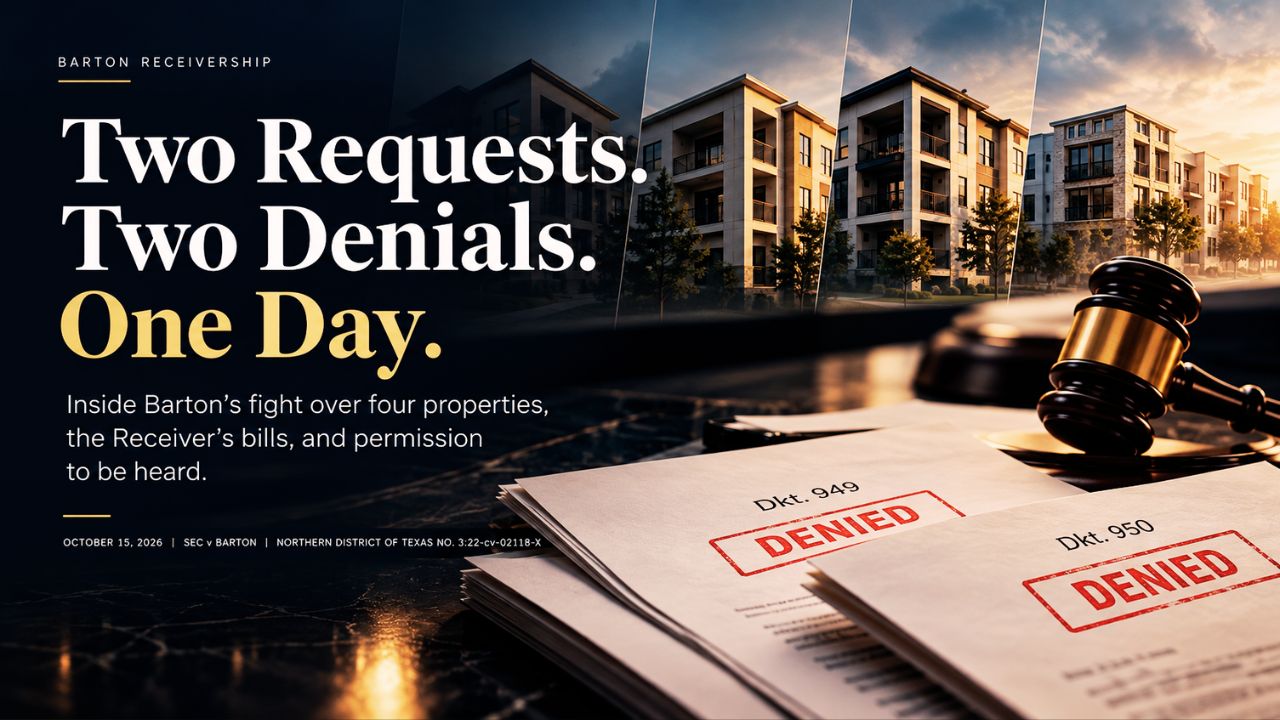
On January 8, 2026, the Court denied Barton’s emergency motion to stay the Second Receivership Order, holding that he had not met the standard for a stay pending appeal.
Fifth Circuit Appeal Dismissed
On January 21, 2026, the Fifth Circuit granted the SEC’s opposed motion to dismiss Barton’s appeal for lack of jurisdiction in No. 25-11044. The judgment issued as the mandate.
Receiver’s Fourteenth Quarterly Status Report
On January 30, 2026, the Receiver filed the Fourteenth Quarterly Status Report (4Q25), covering October 1 through December 31, 2025. The report states that Barton’s appeals and sale-order litigation continued to delay the receivership, claims process, and property sales, and it asserts that equity in several properties continued to erode during the delay.
FEB
Fee Application Extension Requested and Granted
On February 10, 2026, the Receiver moved for an extension of time to file the Seventh through Thirteenth Quarterly Fee Applications. On February 13, 2026, the Court granted the Receiver’s motion for extension of time to file the Seventh through Thirteenth Quarterly Fee Applications.
Homestead / Rock Creek Motion Filed
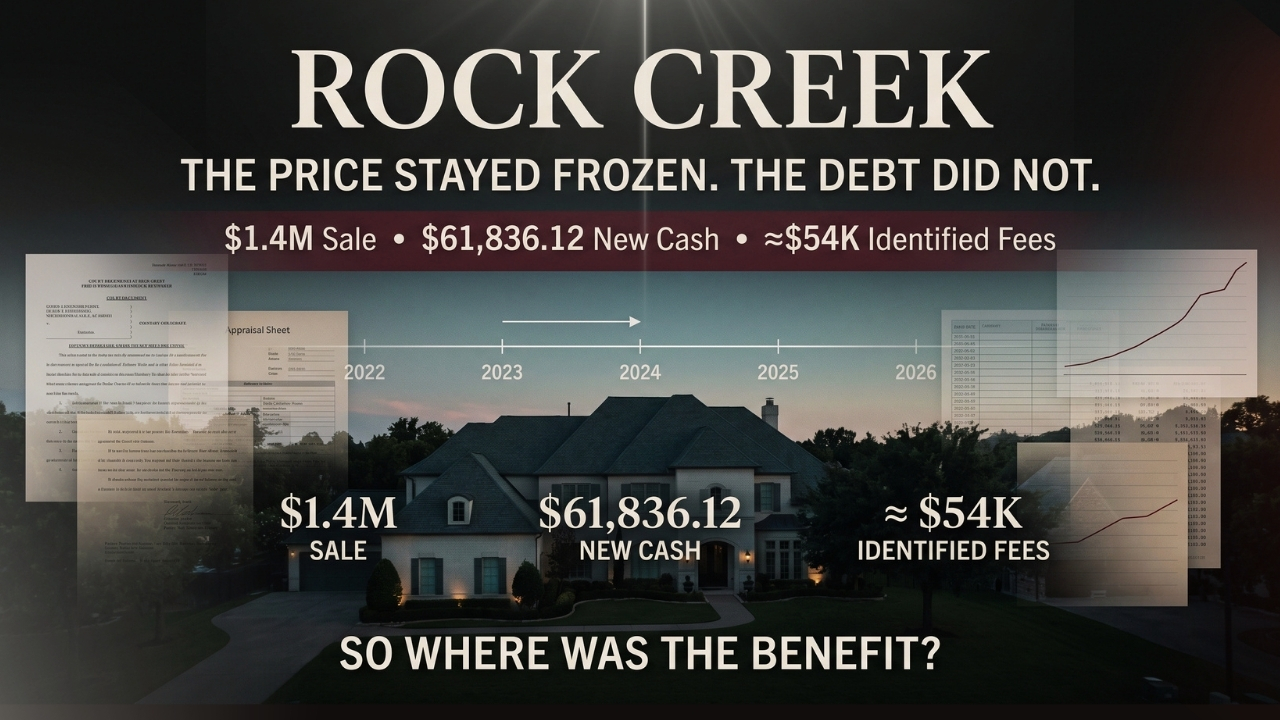
On February 10, 2026, Barton filed an Emergency Motion to Modify Receivership Over Homestead concerning 4107 Rock Creek Drive. He argued that the receiver had been leasing the property for $5,000 per month while the mortgage alone was about $10,500 per month, with additional default interest, taxes, and insurance, causing continuing equity erosion.
Change in Role of Counsel
On February 26, 2026, Barton filed a Notice of Change in Role of Counsel stating that, because the case was administratively closed and resources had been exhausted, Jules Slim’s active services were no longer required for the district-court docket, while Slim would remain in a supervisory and advisory role. Barton stated he would proceed pro se for urgent district-court matters arising during administrative closure.
MARCH
Barton Sought Pro Se Status and CM/ECF Access
On March 16, 2026, Barton filed a motion for leave to proceed pro se and for authorization to file electronically through CM/ECF. He argued that the case was administratively closed, urgent matters could still arise, he had no active attorney for such matters, and depleted resources made pro se access a practical necessity.
Supreme Court Cert Petition Not Selected for Hearing
On March 30, 2026, the Office of the Clerk of the Supreme Court notified counsel in Timothy Barton v. Securities and Exchange Commission, No. 25-465, that the petition for a writ of certiorari was not selected for hearing.
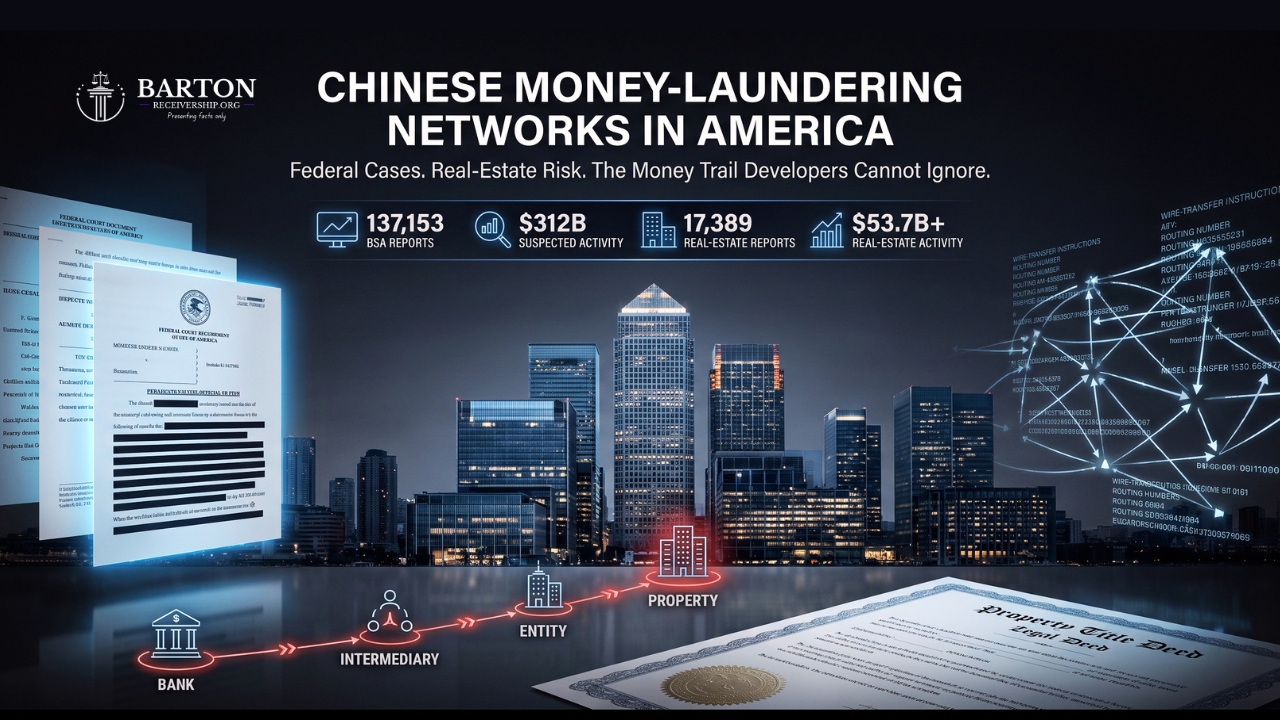
Explore the Hidden Alliance of SEC with Chinese CCP Agents against an American Citizen
The ongoing case involving Timothy Barton has raised serious concerns about the Receiver’s management of artworks, antiques, and personal property seized from Barton’s Turtle Creek
A 'political “witch hunt”,' where the SEC and DOJ are purportedly employing 'lawfare' tactics against another Trump supporter
The ongoing case involving Timothy Barton has raised serious concerns about the Receiver’s management of artworks, antiques, and personal property seized from Barton’s Turtle Creek


The aggressive actions against Timothy Barton, including the abrupt seizure and undervalued sale of his assets, have raised serious questions about the integrity of the legal process
The ongoing case involving Timothy Barton has raised serious concerns about the Receiver’s management of artworks, antiques, and personal property seized from Barton’s Turtle Creek

News & Updates



Frequently Asked Questions

1. What are the charges against Tim Barton?
2. What is the basis of Tim Barton's defense?
3. What is the current status of the case?
The initial receivership was vacated by the Fifth Circuit, establishing a legal precedent that the SEC and the District court cannot seize property in the absence of evidence. Furthermore, a judge cannot impose punitive measures on a defendant for alleged misconduct without a trial having taken place.
4. How can I support Tim Barton?
5. How has the court-appointed receiver impacted Barton's assets?
6. What is the significance of the Fifth Circuit Court's decision?
7. What evidence supports Barton's claim of innocence?
8. How can I stay updated on the case?
9. What actions can I take to help spread awareness?
10. What is the legal basis for challenging the receivership?
The legal basis includes the receiver’s lack of experience in real estate, their close relationship with the Judge as well as their selection over a receiver who was highly experienced and knowledgeable in real estate, their exorbitant payments to themselves and commingling of all of Mr. Barton’s assets. Improper authority, improper sales and accepting contracting for assets that are illegal while awaiting an appeal. The misconduct of the receiver was obvious by the Fifth Circuit Court’s decision to vacate the first receivership due to these issues.
11. What are the potential outcomes of the case?
Join Us
Stay informed by exploring our website and subscribing to our newsletter for the latest updates.