

A careful, evidence-based analysis of the Barton case through the federal CMLN typology lens.
The Evidence-Based Answer
The fairest answer is this: the Barton case has not conclusively proven a Chinese money-laundering operation, but it has exposed a fact pattern that strongly resembles the red flags federal agencies now associate with Chinese money-laundering networks and real-estate integration. The difference is important. A pattern is not a verdict. But a pattern is enough to demand a serious money-trail investigation.
The central question is whether the Barton case exposes a Chinese money-laundering pattern that warrants deeper examination of the money trail.
That investigation must begin with roles. Who found the co-lenders? Who controlled communications? Who handled transfer instructions? Who received commissions? Who resisted documentation? Who reported suspicious activity? And who ultimately became the target of enforcement?
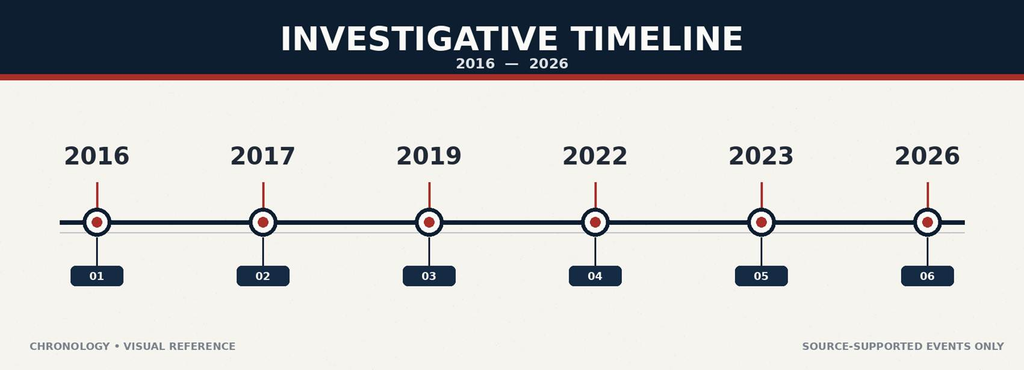
The government’s version
The government alleges that Barton, Wall, Fu, and the Wall entities raised more than $26 million from more than 100 Chinese co-lenders through real-estate investment offerings tied to Texas property projects. The SEC and DOJ describe the matter as a fraud and securities case. Barton has pleaded not guilty in the criminal case, and a trial is scheduled for November 2026.
For the government posture, see the SEC Litigation Release, the DOJ Dallas release, and the Barton case overview.
The defense version
The defense account points in a different direction. It argues that Fu was the original promoter and intermediary; that Barton was brought in later as a fee developer; that Fu controlled the Chinese lender relationships; that proxy-remitter and source-of-funds concerns emerged; and that Barton reported suspected money laundering in 2019 before the government case was filed.
The Walji letter analysis says the letter identified Fu as the central actor. The complete timeline places Guidepost and law-enforcement reporting in 2019.
Government Allegations vs. Defense Assertions
Chart 1: Government allegations vs. defense assertions
| Issue | Government posture | Defense posture |
| Project fundraising | Barton, Wall, and Fu raised money through fraudulent securities offerings. | Fu controlled Chinese co-lender access and funding channels; Barton was a fee developer. Fu was the master lender. |
| Use of funds | Funds were misused and misappropriated. | Projects were underfunded and disrupted by Fu/Wall failures and later litigation. |
| Co-lender communications | Co-Lenders were misled about land prices, guarantees, and use of funds. | Communications and co-lender relationships were brokered by Fu. |
| Money laundering concerns | Not the central government framing of the Barton enforcement case. | Barton reported suspected money laundering before the SEC case. |
| Legal posture | Civil enforcement and criminal charges pending. | Barton has pleaded not guilty and disputes the allegations. |
Does the Barton Case Show a Chinese Money-Laundering Pattern?
A responsible analysis should not begin with labels. It should begin with a checklist. The question is whether the case contains the same risk indicators FinCEN and prosecutors have described in Chinese money-laundering network cases. The evidence does not have to prove every element of a criminal laundering charge to justify deeper scrutiny. It only has to show enough overlap to demand follow-up.
Barton Pattern Checklist
Chart 2: Barton pattern checklist
| Red flag | Present in the Barton debate? | Why it matters |
| Chinese co-lender funds in U.S. real estate | Yes, central to the government allegations. | The real-estate channel is undisputed; the legal meaning is disputed. |
| Intermediary controls access to co-lenders | Defense says yes, pointing to Fu. | Control of co-lender relationships is critical to responsibility. |
| Proxy remitters / third-party funds | Defense says yes; requires transaction-level proof. | Sender-buyer mismatches are a recognized AML concern. |
| KYC or source-of-funds resistance | Defense says Fu resisted and denied documentation. | Refusal to document origin and control is a major red flag. |
| Whistleblower report before enforcement | Defense says Barton reported in 2019. | Timing supports the question of whether the reporter became the target. |
| Government focus on alleged victim rather than alleged mastermind | Defense argues yes. | This is the core due-process and selective-enforcement concern. |
Why CCP language must be handled carefully
The phrase “CCP connection” should not be used as a substitute for proof. It should be used only when the evidence supports an inquiry into state links, political influence, foreign-control risk, or national-security implications. A person being Chinese is not evidence of CCP direction. A transaction involving Chinese capital is not evidence of espionage. But alleged ties to powerful officials, proxy remitter structures, and opaque funding channels can justify asking whether the money trail was bigger than a private business dispute.
What Evidence Would Prove More Than Suspicion?
Chart 3: What would prove more than suspicion?
| Claim level | Evidence needed | Current treatment in this Article |
| China-related money movement | Wire records, sender identities, currency-control context. | Supported as a topic of investigation. |
| Chinese money-laundering network | Mule accounts, mirror transfers, concealment, intermediary fees, source-of-funds proof. | Possible pattern; not stated as a judicial finding. |
| CCP-affiliated actor | Official role, Party membership, state-linked business record, or documented government relationship. | Requires specific proof. |
| PRC-directed operation | Evidence of state instruction, intelligence objective, coercive benefit, or official protection. | Not assumed. |
What the public should ask next
The Barton case should not be judged by slogans. It should be judged by documents: wire records, lender identities, KYC requests, transfer instructions, communications, commission records, Guidepost findings, agency reports, and the timing of enforcement decisions. If those materials confirm that Barton raised legitimate AML concerns before the government moved against him, then the case becomes more than a securities dispute. It becomes a test of whether federal enforcement protects whistleblowers or punishes inconvenient witnesses.
Conclusion
Did the Barton case expose a Chinese money-laundering pattern? It exposed enough to demand that question. The public record contains Chinese co-lender funds, real estate projects, an intermediary accused by the defense of controlling the funding apparatus, alleged proxy-remitter concerns, and a whistleblower timeline that predates the SEC action. That does not decide the criminal case. It does raise the national-security issue the government should have confronted from the beginning: follow the money, not the easiest target.
Frequently Asked Questions
Has the Barton case proven a Chinese money-laundering operation?
No. The Barton case has not conclusively established that a Chinese money-laundering network operated through the projects at issue. The narrower question examined here is whether elements of the disputed fact pattern resemble red flags that federal agencies associate with Chinese money-laundering networks and therefore warrant closer examination of the underlying transactions.
Why is the Barton case being compared with Chinese money-laundering networks?
The comparison is based on the alleged structure of the transactions—not the nationality of the lenders. The issues examined include Chinese co-lender funds entering U.S. real-estate projects, alleged intermediary control over lender relationships, claimed proxy remitters, source-of-funds and KYC concerns, and Barton’s reported money-laundering concerns before the later enforcement action.
What role does Michael Fu play in the defense account?
The defense position identifies Haoqiang “Michael” Fu as the original promoter and intermediary who controlled relationships with Chinese co-lenders and their funding channels. The government’s allegations, however, describe Barton, Wall, Fu, and the Wall entities as participants in the investment offerings. Those competing accounts make control of communications, transfer instructions, commissions, and lender relationships central to the money-trail analysis.
What are proxy remitters, and why do they matter?
A proxy or third-party remitter is someone who sends money on behalf of another person or transaction party. A mismatch between the person identified in an agreement and the person actually sending funds can be an AML warning sign because investigators need to establish the true source, ownership, purpose, and control of the money. A mismatch alone does not prove money laundering.
What does KYC mean in this context?
KYC means “Know Your Customer.” It refers to procedures used to establish identity, beneficial ownership, source of funds, and other information needed to understand who is actually behind a financial transaction. The defense alleges that documentation and source-of-funds concerns arose in the Barton-related transactions, an issue that would require transaction-level evidence to resolve.
Did Timothy Barton report suspected money laundering before the SEC case?
The defense account states that Barton reported suspected money-laundering concerns in 2019, before the SEC filed its civil enforcement action in 2022. The timing is relevant to the article’s broader question about whether the reported financial concerns were fully investigated before enforcement focused on Barton.
Does Chinese investment in U.S. real estate indicate a CCP connection?
No. Chinese nationality, Chinese investment, or a China-origin transaction does not by itself establish a connection to the Chinese Communist Party or a state-directed operation. A CCP or PRC-government connection would require separate evidence of official roles, state direction, political relationships, government-linked business activity, protection, or control.
What evidence would be needed to establish an actual Chinese money-laundering network?
A stronger finding would require transaction-level evidence such as wire records, sender identities, account ownership, mule or proxy accounts, mirror transfers, intermediary compensation, beneficial-ownership records, source-of-funds documentation, communications, and evidence showing concealment or control. A pattern of red flags can justify investigation, but it is not the same thing as proof.
Why does real estate matter in money-laundering investigations?
Real estate can absorb large amounts of money and convert complex financial flows into tangible assets. Properties may also be held through companies, trusts, nominees, or other structures, which can make beneficial ownership and source-of-funds analysis especially important.
What is the central unanswered question in the Barton case?
The central money-trail question is who actually controlled the Chinese lender relationships, funding instructions, transfers, documentation, and communications—and whether investigators followed that trail far enough to determine the respective roles of every participant before enforcement decisions were made.
Read More
This article is part of our continuing examination of Chinese money-laundering networks, U.S. real estate, the disputed funding structure in the Barton case, and the broader questions raised by the money trail.
Chinese Money-Laundering Networks in America
Federal cases, FinCEN data, real-estate exposure, network roles, and the warning signs that developers and investigators should understand.
Read: Chinese Money-Laundering Networks in America
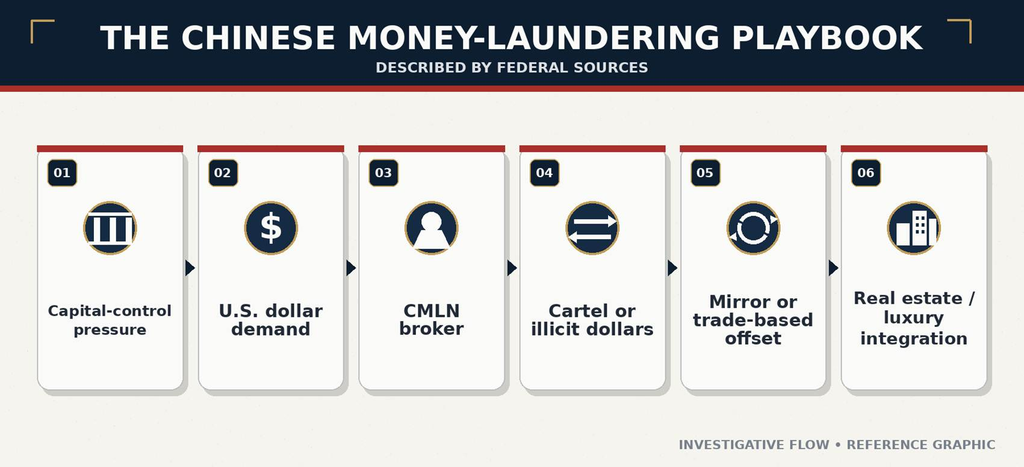
The Chinese Money-Laundering Playbook
A closer look at mirror transfers, proxy remitters, money mules, shell entities, trade-based value movement, and how suspicious funds can ultimately move into U.S. real estate.
Read: The Chinese Money-Laundering Playbook
What Is Real Estate Money Laundering?
An explanation of placement, layering, integration, beneficial ownership, third-party transfers, source-of-funds concerns, and the major warning signs surrounding real-estate transactions.
Read: What Is Real Estate Money Laundering?
CCP Connection & National Security: Chinese Money Laundering in American Real Estate
An examination of Chinese money-laundering network risks in American property markets, the national-security dimension, and where the disputed Barton money trail enters the discussion.
Read: Chinese Money Laundering in American Real Estate
The Walji Letter: Barton’s Counsel Named Fu as Mastermind
A closer examination of the defense-side account concerning Michael Fu’s alleged role in the Chinese funding structure and what Barton’s counsel says regulators were told before the SEC case.
Read: The Walji Letter — Barton’s Counsel Named Fu as Mastermind
The Complete Tim Barton Case Timeline: 2017 to 2026
Follow the broader chronology of the Barton matter, including the Chinese co-lender relationships, Barton’s reported AML concerns, the SEC enforcement action, receivership, appeals, and developments through 2026.