


A concise guide to the mechanics, red flags, and why property transactions matter.
The Big Picture
Real estate money laundering is the use of property transactions to hide the source, ownership, control, or purpose of money. The property does not have to be a mansion or a luxury condo. Any real estate asset can become a laundering tool if the purchase, financing, beneficial ownership, or resale is designed to make suspicious money look legitimate.
The danger is not just the purchase. It is the story the purchase creates. Once money becomes a deed, an improvement budget, a contractor payment, a loan repayment, or a refinance, the source can become harder to see. That is why real estate is a classic integration vehicle: it can convert questions about suspicious funds into questions about property value.
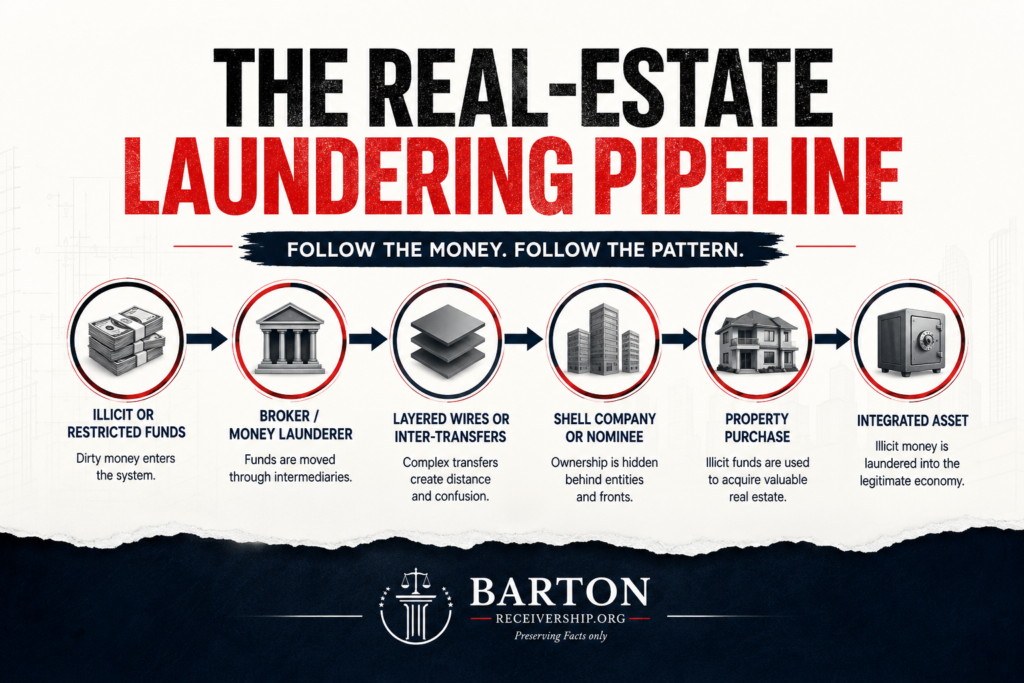
The three stages of laundering through property
Most money-laundering explanations begin with three stages: placement, layering, and integration. In practice, those stages can overlap. A property transaction can be the placement point, the layering tool, and the integration asset all at once.
Chart 1: Three-stage laundering model in real estate
| Stage | How it can appear in real estate | Red flag |
| Placement | Cash or unexplained funds enter accounts used for deposits, escrow, or development expenses. | Sender does not match buyer or contract party. |
| Layering | Funds move through multiple accounts, entities, nominees, or mirror transfers before closing. | Transaction history becomes unnecessarily complex. |
| Integration | Property is held, leased, refinanced, sold, or pledged as clean-looking wealth. | Value is explained by the asset rather than by the source of funds. |
Why real estate is different from ordinary banking
Banks are built around transaction monitoring. Real estate closings are built around getting a deal closed. Title companies, attorneys, brokers, developers, lenders, escrow agents, and investors may each see part of the transaction, but no single participant always sees the full source-of-funds picture. That creates a gap that sophisticated actors can exploit.
A wire that would look odd in isolation can look less suspicious when it arrives with a contract, a property description, and a closing deadline. A nominee buyer can look like a normal entity buyer. A third-party remitter can look like a family member, investor, or business associate. The laundering risk lives in those ordinary-looking explanations.
FinCEN has repeatedly focused on real estate because anonymous or non-financed property transfers can hide beneficial ownership. Its current residential real estate reference page also confirms that the 2026 reporting rule is presently vacated while the government appeal proceeds.
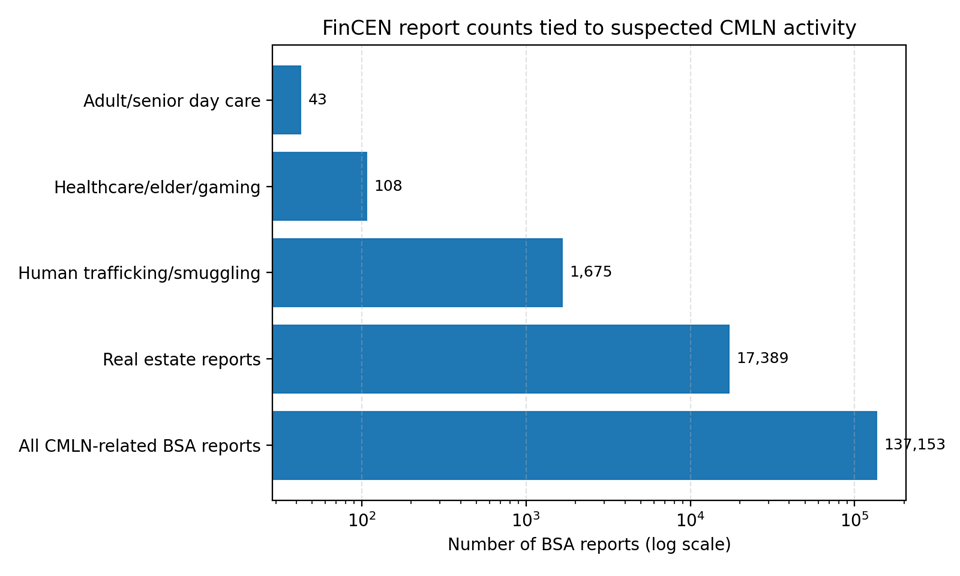
What makes a transaction suspicious?
Suspicion is not the same as guilt. A single red flag usually proves very little. The concern grows when red flags stack: the buyer is an entity, the sender is different from the buyer, the money arrives in unusual increments, the parties resist KYC documentation, the funds move through multiple accounts, and the deal relies on people who cannot explain the source of money.
Chart 2: Real-estate laundering red flags
| Red flag | Why it matters | Innocent explanation possible? |
| Third-party wires | May indicate nominee or mule activity. | Yes, but it needs documentation. |
| Last-minute sender changes | Can break the chain of source-of-funds review. | Yes, but should be explained in writing. |
| Unusual occupation vs. large transfers | Raises unexplained-wealth concerns. | Yes, if wealth source is documented. |
| Entity buyer with hidden owner | Makes beneficial ownership harder to confirm. | Yes, many legitimate buyers use LLCs. |
| Refusal to provide KYC records | Can indicate concealment. | Harder to explain in a regulated transaction. |
The China-related dimension
China-related money movement adds another layer because the PRC restricts how much foreign currency individuals may convert and move abroad annually. That creates demand for workarounds. Some workarounds may be lawful depending on facts and jurisdictions. Others may involve underground banking, proxy remitters, false documentation, money mules, or mirror transfers. The compliance question is whether the transaction structure reveals the true source and control of the funds.
The U.S. Commerce Department’s country guide explains the existence of China’s foreign-exchange controls. FinCEN separately describes how demand for U.S. dollars among Chinese citizens can intersect with cartel money-laundering demand. See China trade financing/currency controls and FinCEN CMLN analysis.
The Barton relevance
The Barton case became relevant to this issue because the disputed Wall projects involved Chinese co-lender funds, Fu’s intermediary and master lender role, and defense claims about proxy-remitter activity and AML concerns. The government alleges fraud. Barton disputes the allegations and has pleaded not guilty in the criminal case. The article does not ask readers to accept either side blindly. It asks whether the money trail received the level of scrutiny the pattern demanded.
Chart 3: Legitimate investment vs. laundering concern
| Fact pattern | Legitimate version | Concern version |
| Foreign co-lenders fund a U.S. project through a master lender | Co-lender or Master lender wants exposure to U.S. real estate. | Funds are routed through hidden remitters to obscure true source. |
| Developer receives project funds | Money is used according to contract. | Money is not traceable to contracted purpose. |
| Intermediary Master Lender manages co-lenders | Intermediary Master Lender provides translation and access to deals. | Intermediary Master lender controls funds, information, and pressure tactics. |
| KYC records requested | Normal compliance step. | Refusal may signal concealment. |
Conclusion
Real-estate money laundering is not always obvious because it hides behind legal paperwork. The cleanest-looking deed can still carry a dirty money trail. The safest public analysis is evidence-based: follow the source of funds, identify the beneficial owner, compare the sender to the buyer, and test whether the transaction had a real business purpose. That is the lens through which this series approaches the Barton case.
Frequently Asked Questions About Real Estate Money Laundering
What is real estate money laundering?
Real estate money laundering is the use of property transactions to hide or disguise the source, ownership, control, or purpose of money. Property can become part of a laundering scheme through purchases, financing, beneficial ownership structures, development expenses, refinancing, or resale.
What are the three stages of money laundering in real estate?
The three commonly recognized stages are placement, layering, and integration.
- Placement: Funds enter accounts used for deposits, escrow, property purchases, or development expenses.
- Layering: Money moves through multiple accounts, entities, nominees, or transfers, making its original source more difficult to trace.
- Integration: The funds become connected to property that can later be held, leased, refinanced, sold, or pledged as apparently legitimate wealth.
In real estate transactions, these stages can overlap rather than occur separately.
What are common real estate money-laundering red flags?
Common warning signs can include third-party wires, last-minute changes in the sender of funds, unexplained large transfers, hidden beneficial ownership, unusually complicated transaction structures, and refusal to provide KYC or source-of-funds documentation.
A single red flag does not necessarily establish wrongdoing. Concerns become more significant when several warning signs appear together, and the parties cannot provide reasonable documentation or explanations.
Why can real estate be attractive for money laundering?
Real estate can make suspicious funds appear connected to a legitimate asset. Money may be converted into a deed, property improvements, contractor payments, loan repayments, refinancing proceeds, rental income, or sale proceeds.
Once funds are tied to property, attention may shift from the original source of the money to the apparent value of the asset. That is why following the source of funds, identifying beneficial ownership, and understanding who actually sent and controlled the money are important parts of evaluating suspicious real estate transactions.
Further Reading
For readers who want to follow the broader investigation into real estate money laundering, China-related funding, whistleblower reporting, and the disputed money trail in the Barton case, these related articles provide additional context:
- CCP Connection & National Security: Chinese Money Laundering in American Real Estate — The previous article in this series examines FinCEN data, five major real estate laundering red flags, the national-security dimension of foreign property investment, and how those issues intersect with the disputed money trail in the Barton case.
- Whistleblower Retaliation: How the Government Punishes — Examines how investigations, asset restrictions, litigation pressure, and government process can become part of a broader retaliation pattern after suspected misconduct is reported.
- The Whistleblower Retaliation Playbook — Looks at the sequence that can emerge after a warning is raised: ignored or narrowed concerns, escalating pressure, economic isolation, and a changing public narrative.
- Did the Barton Case Follow the Whistleblower Retaliation Pattern? — Applies that framework directly to the Barton chronology and examines the relationship between Barton’s reported concerns and the government actions that followed.
- The Complete Tim Barton Case Timeline: 2017 to 2026 — Provides the broader chronology of the Barton matter, including the real estate relationships, reported money-laundering concerns, contacts with federal authorities, SEC enforcement, the receivership, and subsequent proceedings.